
Planetary WE Lab: Practice
We live in a time of profound ecological, social, and cultural transformation. Climate change, global inequalities, and the experience of collective trauma confront us with fundamental questions about how we want to live together in the future. Yet before new solutions can emerge, we may need new ways of perceiving, thinking, feeling, and relating.
This seminar is conceived as a shared Future Lab. It invites participants to explore some of the most pressing questions of our time: Who are we in a changing world? How are we connected with other people, future generations, and the more-than-human world? And what kinds of stories can help us create a livable future?
Drawing on insights from transformation studies, sustainability science, philosophy, trauma research, and consciousness studies, the seminar creates a transdisciplinary learning space where academic inquiry is woven together with personal experience, dialogue, and social responsibility. The focus is not only on understanding global challenges but also on exploring how new forms of responsibility, resonance, and interconnectedness can be experienced and embodied.
At the center of the seminar are dialogical encounters, contemplative practices, creative reflection, and the collective development of new narratives. Participants will explore how a global, transgenerational, and planetary "we" might emerge — a way of belonging that reimagines the relationships between human beings, cultures, generations, and the living Earth.
The seminar is open to all who understand education as a space for encounter, personal growth, and societal transformation. It offers an opportunity to bring one's own questions into the conversation, to encounter diverse perspectives, and to experiment collectively with what planetary education might mean in the twenty-first century.
Prof. Dr. Kazuma Matoba
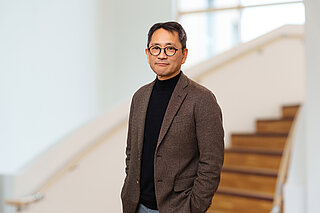
Apl.-Professor in der Fakultät für Wirtschaft und Gesellschaft in UWH
Director of Institute for Global Integral Competence
Dr. Anna Storck
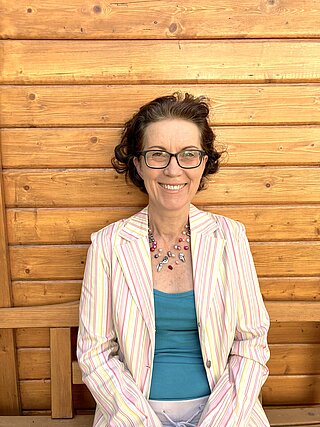
Hi, I’m Anna.
I’ve spent over 20 years helping people, teams, and organizations learn, grow, and connect across cultures. My background blends a MA in Culture & Adult Education in Poland and in the UK, a PhD in Political Science in Germany, and studies at a Māori university in New Zealand, where I deepened my understanding of indigenous wisdom and ways of living in harmony with the world.
I love bringing together ancient knowledge, modern science, and integral approaches to help us see the bigger picture and our place in it. My work takes me from university classrooms to corporate training rooms, from intercultural dialogue circles and well being coaching for women to the co-founding of a start-up that’s creating a virtual reality app for meditation and well-being.
In the Planetary WE Lab, I’ll guide you through journeys of self-awareness, intercultural understanding, and connection with the wider world, including nature, ancestors, and the cosmos. Together, we’ll explore how we can live and work in ways that create unity, resilience, and joy, while honoring our diversity.
Glenna Gerard, B.Sc.
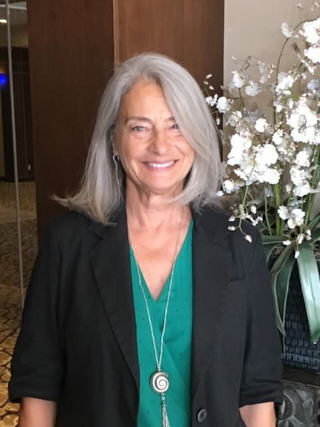
Hi, I’m Glenna. Since my childhood I've been fascinated by how we humans create meaning together and how this shapes our personal and professional lives — impacting relationships, conflicts, and, local and global ecologies. I’m the co-author, with Linda Ellinor, of Dialogue: Rediscover the Transforming Power of Conversation. My work has taken me into organizations, communities, and leadership spaces.
I believe it is only when we can witness ourselves making meaning of our experiences—noticing our assumptions, interpretations, stories, emotions — that we become capable of conscious intentional choices. The act of witnessing literally shifts levels of consciousness/awareness. We see beyond immediate challenges to the workings beneath the surface of the complex systems we all live in. We see new ways to make meaning that open up new possibilities we could not see before.
After 35+ years, I continue to design and facilitate Dialogue experiences as a primary practice, with the aim of nurturing spaces that invite us to become more awake to ourselves, to one another, and to the interdependent and multi-dimensional relationships we all inhabit, shape, and are shaped by, throughout our lives. And, tap the practical and transformative agency that arises.
It is very exciting to imagine engaging, experiencing, experimenting and learning with each and all of you through the Planetary WE Lab.
Lee Mason, B.A.
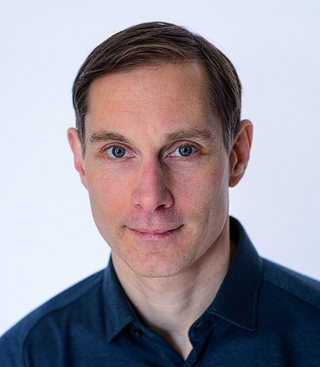
My mission in life is to help people lead optimally healthy, happy and meaningful lives. As a physical therapist, I've worked in rehabilitation centers, a university hospital and a hospice for the terminally ill. As a teacher, I've taught university courses about well-being and self-development. As a coach, I help clients to develop healthy habits, increase self-awareness and achieve spiritual growth. I also wrote a book about sustainably achieving meaningful goals. My first online course, The Essence of Integral Flourishing, is designed to help people optimize well-being and transform unproductive thoughts, emotions and beliefs into constructive behavior. My second online course, Overflowing Purpose, aims to make sense of our turbulent age and provides various practical exercises to engage humanity’s current crises with wisdom and resilience.
Ziele & Kompetenzen
This seminar will take you on an experimental journey with international facilitators to answer the following research questions: (1) How can we heal intergenerational and transgenerational trauma? (2) How can we address global challenges? (3) How can we promote a sense of embodiment? (4) How can we awaken individual and collective responsibility? (5) How can we realize unity in diversity, wholeness, and oneness?