
Winter Academy: „Nothing Is New, neither Is Anything Old“? Evolution in Nature, Culture UND Society
At first, this reference to art history may seem paradoxical, but it encapsulates a concept that transcends the realm of art: genuine innovation rarely emerges from nothingness. Instead, they develop from what already exists through processes of variation, recombination and selection. At the same time, the existing is continually reinterpreted, adapted and embedded in new contexts.
This line of thought forms the starting point for the Winter Academy. Building on the concept of biological evolution, we explore whether it can be viewed as an overarching principle of change, applicable to fields ranging from chemistry and biology to medicine, economics, society and the arts. What fosters innovation? Why do some ideas, forms or technologies prevail whilst others disappear? How do diversity and complexity arise? And which traces of the past continue to shape our thinking and actions today?
We invite you to consider the present within the context of evolutionary timeframes, and to explore the connections between the natural, cultural, and social sciences. Our guiding principle is the supposed paradox articulated by the artist Robert Smithson: the new always carries the past within it, and the old remains alive only by changing.
During the Winter Academy (21–27 February 2027), mentors and students will retreat to the Bregenzerwald for a week. There, we will explore the central theme through an interdisciplinary approach, drawing on various academic disciplines and artistic practices. While the mornings are free for participants to spend as they wish (e.g. skiing and winter hiking), the afternoons and evenings will be devoted to presenting and discussing work developed during the semester. The cost of accommodation (twin room including half board) is €672 per person, with travel costs additional.
Prof. Dr. Renate Buschmann
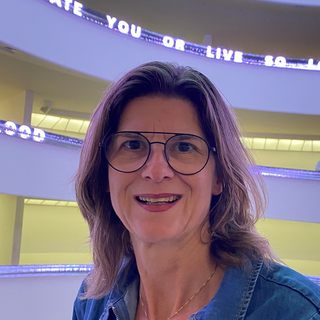
Ich bin Kunstwissenschaftlerin und seit 2020 im Studium fundamentale am WittenLab tätig. An meinem Lehrstuhl „Digitale Künste und Kulturvermittlung“ beschäftige ich mich mit Themen und Entwicklungen der technologie- und zeitbasierten Künste seit der Mitte des 20. Jahrhunderts bis heute und mit Formaten der Kulturvermittlung, die daraus entstehen. Lassen Sie uns über die Potenziale von Kunst sprechen, um die Gegenwart kritisch zu reflektieren und positive Ansätze zu entwickeln.
Prof. Dr. Hagen Bachmann
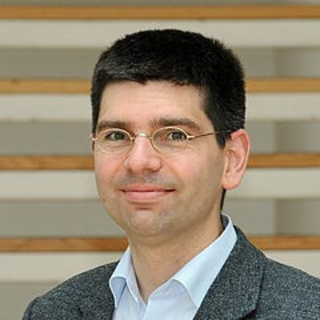
Prof. Dr. med. Hagen Bachmann ist Inhaber des Lehrstuhls für Pharmakologie und Toxikologie. Seine Forschung beschäftigt sich mit der Wirkung von Arzneistoffen, genetischer Variabilität und der Entwicklung neuer therapeutischer Ansätze. Ein Schwerpunkt seiner Arbeitsgruppe liegt auf Protein-Prenyltransferasen und ihren Hemmstoffen. Diese sind unter anderem für Krebserkrankungen, seltene Erkrankungen wie Progerie und neue antibakterielle Wirkstrategien relevant. Für die Winterakademie interessiert ihn besonders, wie evolutionäre Prozesse in sehr unterschiedlichen Feldern wirksam werden: in Molekülen und Krankheitserregern, in Arzneistoffen und Gesundheitssystemen, aber auch in therapeutischen Konzepten, in denen Kunst und Musik eine Rolle spielen.
Dr. Jan Postberg
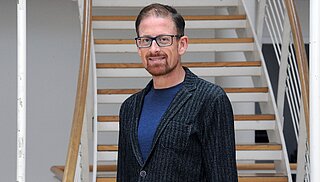
Prof. Dr. Jan Postberg ist Professor für Klinische Molekulargenetik und Epigenetik an der Universität Witten/Herdecke und leitet ein Forschungslabor am Helios Universitätsklinikum Wuppertal. Seine Forschung bewegt sich an der Schnittstelle von Genetik, Epigenetik und Evolution. Besonders interessiert ihn, wie aus kleinen Veränderungen im Erbgut und seiner Regulation neue biologische Funktionen entstehen – und wie sich diese über Millionen Jahre in der Evolution durchsetzen oder wieder verschwinden.
Dr. Alexander Jakobidze-Gitman
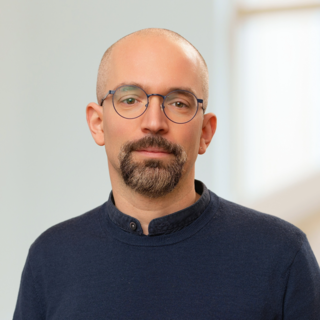
Ich bin ausgebildeter Konzertpianist, promovierter Filmwissenschaftler und selbstgelernter Musikwissenschaftler. Mich begeistert besonders, die Reflexion über die Künste und künstlerische Praxis aufeinander beziehen zu können, sei es bei meinen Lehrveranstaltungen oder Gesprächskonzerten. Es ist meine tiefe Überzeugung, dass die Theorie und intuitives Erlebnis der Künste keine sich ausschließenden Gegensätze sind, sondern Gegenpole, die sich wechselseitig herausfordern und anregen.
Benjamin Ziegs, M.Sc.
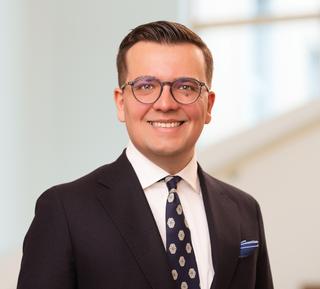
Benjamin Ziegs, LL.M., M.Sc., ist wissenschaftlicher Mitarbeiter am WIFU-Stiftungslehrstuhl für Recht der Familienunternehmen an der Universität Witten/Herdecke. Er studierte Wirtschaftswissenschaften in Witten, Bologna und St Andrews sowie Wirtschafts- und Steuerrecht an der Ruhr-Universität Bochum. Über die eigene Disziplin hinauszudenken, ist ihm ein besonderes Anliegen – nicht zuletzt, weil er sich abseits der Rechtswissenschaft leidenschaftlich für die Wechselwirkung von Mensch, Musik und Kunst interessiert. Als bekennender Opernliebhaber und ambitionierter Hobby-Kunstsammler ist er von einem barrierefreien Zugang zu Kunst und Kultur überzeugt und entdeckt gern neue Werke, Künstler und Künstlerinnen sowie Perspektiven auf die großen und kleinen Fragen des Lebens.
Participation modalities
The cost of accommodation (twin room including half board) is €672 per person, with travel costs additional.
Objectives & Competences
The seminar involves an in-depth examination of evolutionary processes in nature, culture and society. It also considers the extent to which continuity and disruption shape such long-term transformations. Topics range from the evolution of genomes, pathogens and medicines to the development of music, artistic expression and economic systems, and whether ideas themselves are subject to cultural evolution.
Led by five mentors from five different academic disciplines, this seminar provides students with an understanding of how various sciences address the central theme, and of how these multi-perspective approaches can be linked together. Students also learn to consider broader temporal dimensions that far exceed their own lifetimes and those of future generations, recognising the consequences of their actions as building blocks for far-reaching developments.
Students will discover how insights from different disciplines can enrich one another, inspiring them to formulate new, more in-depth questions. Rather than hastily accepting intuitively obvious explanations, students are guided to first identify relevant questions, take the history of the phenomenon into account and research a broad spectrum of potentially influential factors. They also practise interdisciplinary communication, develop an understanding of other fields of knowledge, and reflect on the production of knowledge and its dependence on subject-specific methodology.