
Minor Gestures, Complex Perspectives. Experiencing Contemporary Art at the Venice Biennale (Seminar With Excursion)
The Venice Biennale is one of the world's most important international exhibitions of contemporary art. Since its founding in 1895, it has been held every two years in Venice, bringing together artists, curators, and visitors from numerous countries. It consists of both a major international main exhibition at the two venues "Giardini" and "Arsenale," as well as national pavilions scattered throughout the city, where current trends in contemporary art from the respective countries are presented.
The main exhibition of the 61st Venice Biennale, In Minor Keys, was developed by Koyo Kouoh, who passed away in 2025 and was the first African woman to be appointed curator of the Biennale. The national pavilions, meanwhile, follow their own thematic focuses. Many contributions address current global crises such as the looming climate catastrophe, water scarcity, environmental destruction, war, or issues of migration and social inequality. This year, the German Pavilion explores the social and cultural aftermath of the GDR and, through the works of Henrike Naumann and Sung Tieu, examines how historical ruptures, East German experiences, migration, and social exclusion continue to be felt to this day.
The excursion to Venice will take place from November 12 to 15, 2026, and will provide an opportunity to engage directly with contemporary art on site. Group tours, discussions, and short presentations will allow participants to view, discuss, and critically reflect on the exhibitions and the artistic works on display. The selection of the sites to be visited will be made collectively during a preparatory meeting, which is mandatory. The cost for pre-booked accommodations (3 nights) and admission is approximately €230 per person; individual travel expenses are additional.
Prof. Dr. Renate Buschmann
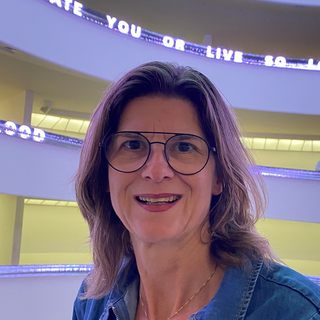
Ich bin Kunstwissenschaftlerin und seit 2020 im Studium fundamentale am WittenLab tätig. An meinem Lehrstuhl „Digitale Künste und Kulturvermittlung“ beschäftige ich mich mit Themen und Entwicklungen der technologie- und zeitbasierten Künste seit der Mitte des 20. Jahrhunderts bis heute und mit Formaten der Kulturvermittlung, die daraus entstehen. Lassen Sie uns über die Potenziale von Kunst sprechen, um die Gegenwart kritisch zu reflektieren und positive Ansätze zu entwickeln.
Dr. Regine Ehleiter
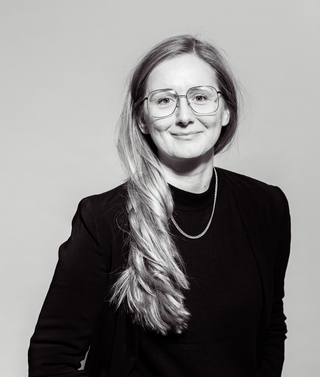
I am an art historian whose research focuses on exhibition history, analog and digital publishing practices, and the intersections of art and ecology. I recently co-edited the volume "Exhibition Ecologies. Entanglements of Art, Institutions, and Politics in the Environmental Crisis" (Berlin/Boston: De Gruyter, 2026). Since March 2025, I have worked as a postdoctoral researcher at the Chair for Digital Arts and Culture Communication at Witten/Herdecke University.
Participation modalities
The field trip to Venice will take place from November 12 to 15, 2026.
The sites to be visited will be selected collectively during a preparatory meeting on October 14, 2026, at 6:15 p.m., which is mandatory.
The cost for the already reserved accommodations (3 nights) and admission fees totals approximately €230 per person; individual travel expenses are additional.
Payment must be received by October 20, 2026, at the latest.
Objectives & Competences
The course focuses on exploring key themes, forms of expression, and social issues in contemporary art within the context of the 61st Venice Biennale. It centers on questions regarding how art responds to current global developments and crises, and what role exhibitions play as venues for social debate and cultural understanding. In addition, the seminar provides fundamental knowledge of the history, structure, and international significance of the Venice Biennale as one of the most important platforms for contemporary art.
Since the seminar is explicitly aimed at students without prior knowledge of art history, the focus is on a collective approach to contemporary art and its social contexts. Students learn to observe artistic works and exhibitions closely, discuss them in the context of current social issues, and exchange different perspectives on contemporary culture. They also acquire fundamental knowledge of key discourses and forms of presentation in contemporary art, as well as the function of major international exhibitions.
At the practical level, the seminar focuses in particular on developing students' ability to articulate their own observations, contribute to discussions with well-reasoned arguments, and critically reflect on different perspectives. Through short presentations, group tours, and on-site discussions, students develop skills in oral presentation, analytical perception, and collaborative reflection. The field trip also strengthens the ability to perceive cultural phenomena within the direct context of exhibitions and urban spaces, as well as to independently establish connections between art, society, and political issues.