
Integral Flourishing
Many people want to flourish and live a full life. But what does flourishing actually mean, and what can we do to flourish more often, both within ourselves and in how we relate to others?
Over three days, we'll explore these questions in a way that is experiential, embodied, and interdisciplinary. We'll work with two complementary maps of well-being: Ken Wilber's Integral Model and Martin Seligman's PERMA+V model. Rather than skimming many topics, we'll go into depth on a few key areas: positive emotion, engagement and flow, meaning, the four quadrants, the multiple intelligences, and states of consciousness and shadow.
Theory and practice are interwoven throughout. Each theme is paired with a body-based or experiential exercise, such as a body scan, interoception, breath-and-movement flow, and shadow and awareness practices. In this way, knowledge isn't just understood, but also experienced in the body and in action.
No prior knowledge is required. Students from all disciplines and levels are welcome, and different perspectives are explicitly treated as an asset to the shared work. A Moodle environment with video and audio material and reflective tasks supports the in-person days. On the third day, students will give short presentations, exploring their personal intersection of meaning, pleasure, and strengths (Tal Ben-Shahar's MPS process).
The aim is for you to leave with a personal map of flourishing and with concrete, self-chosen next steps – for yourself and for the people around you.
Lee Mason, B.A.
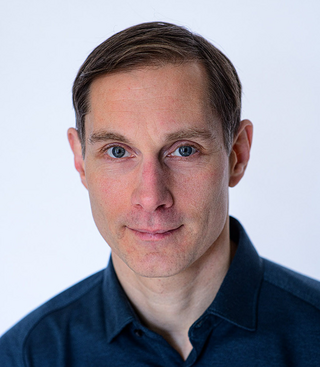
My mission in life is to help people lead optimally healthy, happy and meaningful lives. As a physical therapist, I've worked in rehabilitation centers, a university hospital and a hospice for the terminally ill. As a teacher, I've taught university courses about well-being and self-development. As a coach, I help clients to develop healthy habits, increase self-awareness and achieve spiritual growth. I also wrote a book about sustainably achieving meaningful goals. My first online course, The Essence of Integral Flourishing, is designed to help people optimize well-being and transform unproductive thoughts, emotions and beliefs into constructive behavior. My second online course, Overflowing Purpose, aims to make sense of our turbulent age and provides various practical exercises to engage humanity’s current crises with wisdom and resilience.
Objectives & Competences
Main Topics
The course deliberately goes into depth on a few key areas rather than covering many. At its center are, from Seligman's PERMA+V model, positive emotion, engagement and flow, and meaning; and from Wilber's Integral Model, the quadrants, the intelligences (lines), and states of consciousness including shadow work. Embodiment is the connecting method throughout: interoception, the neurobiology of resilience, and somatic practice. Vitality, relationships (including nonviolent communication), types and developmental levels, and goal accomplishment are included in support.
Learning Outcomes (Knowledge Level)
Students will be able to:
explain the core architecture of the Integral Model (the four quadrants, plus levels, lines, states, and types) and Seligman's PERMA+V model, and describe how the two are complementary;
describe key constructs of the focus areas, including broaden-and-build (Fredrickson), flow (Csikszentmihalyi), meaning and sense of coherence (Frankl, Antonovsky), and multiple intelligences (Gardner);
describe the neurobiology of stress and resilience (HPA axis, autonomic nervous system, interoception) and its relation to well-being and vitality;
locate states of consciousness and the concept of the shadow within the integral framework.
Skills / Competencies (Action Level)
The overarching aim is to build action competence (Handlungskompetenz, in the sense of the HRK), developed across four key competencies:
Subject Competence: apply integral and positive-psychology concepts soundly to personal and societal questions.
Methodological Competence: use the quadrant model as a diagnostic lens; independently apply structured and embodied self-inquiry methods (body scan, interoception, the 3-2-1 shadow process, goal visualization); formulate and track SMART-Integral goals.
Social Competence: apply the basics of nonviolent communication, active constructive responding, and compassion in dialogue and group work; engage constructively with typological and disciplinary diversity.
Self and Personal Competence: perceive and regulate one's own physical, emotional, and mental states; reflect critically on one's own assumptions and tolerate ambiguity; integrate insights into a personal map of flourishing and concrete next steps.
In addition, students explore their personal intersection of meaning, pleasure, and strengths in a short presentation (Tal Ben-Shahar's MPS process), which strengthens their communication and facilitation skills.