
Inside Health – Patient Journeys | Storytelling by and Featuring People Living With Chronic Illnesses
How do people living with chronic illnesses experience society, healthcare systems, medical care and their encounters with professionals and institutions? What experiences, challenges and resources shape their journey through diagnosis, treatment, counselling and care?
This seminar focuses on the stories of people living with chronic illnesses. Working alongside patients, students will explore personal experiences of illness and healthcare, and learn how narrative approaches, such as storytelling, can provide a deeper understanding of health, illness, and healthcare from different perspectives.
Through direct encounters with patients, reflective discussions and creative narrative methods, participants will gain insight into different perspectives on healthcare and social participation. The seminar addresses topics such as communication, relationships, institutional processes, uncertainty, trust, and reflection on one’s own assumptions.
The course is open to students from all disciplines. Participants are invited to question their own perspectives, be open to other viewpoints, strengthen their dialogue skills and explore the relevance of patient and lived experience perspectives for healthcare systems, society, research and care.
Dipl. Stefan Palmowski
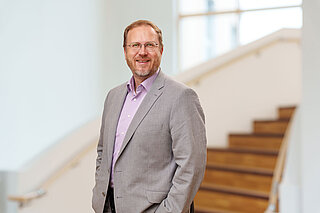
Geboren mitten im Ruhrgebiet begann mein beruflicher Weg als Krankenpfleger in Gelsenkirchen. Nach dem Studium der Pflegewissenschaft in Bochum wechselte ich zur Verbraucherzentrale NRW und durfte in verschiedenen Projekten zum gesundheitlichen Verbraucherschutz mitwirken.
Parallel arbeitete ich freiberuflich als Sachverständiger für die Begutachtung von Pflegebedürftigkeit. Nach der Zeit bei der Verbraucherzentrale wechselte ich als zur Unabhängigen Patientenberatung Deutschland – seinerzeit noch in Hand der Patientenvertretungsorganisationen – bei der ich über viele Jahre Menschen mit medizinischen und sozialrechtlichen Problemen beraten durfte. Neben meiner Arbeit als Krankenpfleger war dies sicher die Zeit, die mich am meisten geprägt hat, zeigte sie mir doch, wo die Baustellen und Problemfelder im deutschen Gesundheitswesen liegen. Seitdem ist mir die Förderung und das Ringen um mehr Patient*innenbeteiligung ein wichtiges Anliegen.
Seit dieser Zeit engagiere ich mich auch für das Thema Organspende, bin seit 2008 für das Projekt „Paten für Organspende“ tätig und darf seit einigen Jahren das Netzwerk Organspende NRW e. V. als Vorstandvorsitzender begleiten. Beruflich arbeite ich seit 2021 als Wissenschaftlicher Mitarbeiter an der Universität Witten/Herdecke und übernehme dort hauptsächlich Aufgaben in der Lehre mit dem Schwerpunk Ärztliche Gesprächsführung.
Prof. Dr. Claudia Kiessling
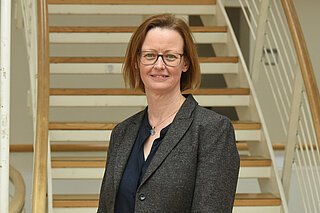
Claudia Kiessling ist Ärztin und gesundheitswissenschaftlerin und leitet den Lehrstuhl für die Ausbildung personaler und interpersoaler Kompetenzen im Gesundheitswesen. Ihre Schwerpunkte in der Lehre sind aktuell die ärztliche Gesprächsführung, Teamkompetenz und Professionelle Identätsbildung.
Objectives & Competences
Main topics:
- Patient journeys and the healthcare experiences of people living with chronic illnesses
- Narrative medicine and storytelling as approaches to experiential knowledge
- Patient perspectives on diagnosis, treatment and healthcare
- Communication and relationship-building in healthcare settings
- Trust, uncertainty and participation in the context of chronic illness
- Reflection on one’s own assumptions and openness to other perspectives as a basis for societal discourse
- Reflection on professional and societal perspectives on health and illness
Learning outcomes (knowledge level):
- Understand key concepts of narrative approaches and storytelling in healthcare and society.
- Recognise the importance of subjective experiences of illness and healthcare.
- Describe the challenges and resources associated with living with a chronic illness in healthcare and societal contexts.
- Understand the role of experiential knowledge in shaping healthcare, health systems, and public discourse.
Learning outcomes (skills and competencies):
- engage with and reflect on different perspectives on health, illness, society and healthcare;
- integrate patient and lived-experience perspectives into discussions and analyses;
- critically reflect on their own assumptions and engage openly with alternative viewpoints;
- strengthen their communication, reflection and dialogue skills;
- develop sensitivity to the value of experiential knowledge in research, society and healthcare;
- apply narrative approaches to explore, communicate and critically reflect on complex healthcare experiences.