
Is the Equation True: Life = Physics + Chemistry?
Is the equation true: Life = Physics + Chemistry?
The answer to this question has far-reaching implications for the understanding of the human organism. If the answer is yes, then all the processes within the organism could be explained causally only by physical and chemical processes. Hence, the organism could be regarded as a machine in which all processes could be predicted. However, creativity, responsibility and freedom would also be lost, as there would be no room for these human qualities within this framework. The seminar question is not merely of a theoretical nature; it is also significant in everyday academic life. For example, medical education involves identifying causal chains for the development of diseases; or, to explain the emergence of emotions and thoughts, the interaction of many neurons in different regions of the brain is used. In the seminar, we will first explore the origins of the seminar question. The physical-chemical perspective will be examined on the basis of the essay of the same name by the quantum physicist Walter Heitler (a student of Niels Bohr and Erwin Schrödinger). This will raise the question: where is a causal understanding of the organism justified, and where is it not? What further insights are needed to gain an appropriate understanding of the human organism and of human beings? We aim to explore the answers to these questions in the seminar.
Prof. Dr. Dirk Cysarz
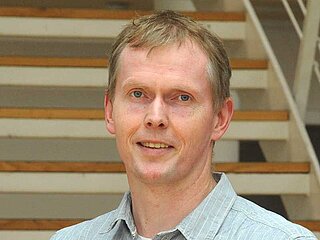
Als Physiker an der UW/H (einer von wenigen) interessieren mich seit vielen Jahren insbesondere die Herzrhythmen und deren vegetative Regulation (Stichwort: Herzfrequenzvariabilität). Damit erforsche ich gemeinsam mit KollegInnen im Rahmen des Integrierten Begleitstudiums Anthroposophische Medizin u.a. Wirkungen von kunsttherapeutischen Verfahren auf die Herzrhythmik. Darüber hinaus interessieren mich die vielen anderen Rhythmen im menschlichen Organismus (Chronobiologie). Diese körpereignen Rhythmen sind Ausdruck von vielfältigen, oft ineinander greifenden, autonomen Regulationen. Eine Eigenschaft dieser Regulationen ist in vielen Fällen ein außerordentliches Maß an Adaptationsfähigkeit. Anders ausgedrückt: der menschliche Organismus hat ein hohes Maß an Selbstregulation. Wie kann man diese Selbsregulation verstehen? Reichen Physik und Chemie? Und: kann/muss man sie im Krankheitsfall bzw. in der Therapie einbeziehen?
PD Christian Scheffer
Mich beschäftigt die Frage, wie Studierende lernen, komplexe Veränderungen sinnhaft zu gestalten; und ob dies so gelingt, dass wir gemeinsam Probleme lösen und Studierende dazu einen eigenständigen Beitrag leisten. In Kurzform: ob transformative Bildung durch Co-Kreativität möglich ist.
Im Gemeinschaftskrankenhaus bin ich als internistischer Oberarzt tätig, in der UWH in der kollegialen Leitung des Integrierten Begleitstudiums Anthroposophische Medizin. Seit 2007 leite ich die PJ-Ausbildungsstation, in der Medizinstudierende Patient:innen mitbetreuen.
Objectives & Competences
The origins of the physico-chemical view of the human organism.
The implications and limitations of the physico-chemical view of the human organism.
What characteristics are missing from a more humanistic view of the human organism?