
Resilient Economics
In Politics, Book I, Chapters 8–10, Aristotle distinguished between "natural" and "unnatural" economics. More precisely, he describes oikonomia (οἰκονομία), or "natural economics", as the art of acquisition and household management aimed at satisfying the needs of the household or the village — a natural, limited art of acquisition with a natural approach to finance. Its purpose is to secure the household's necessary goods. In contrast to this, he posits chrematistike (χρηματιστική), or "unnatural economics". This represents the art of making money and commercial trade as a form of unlimited capital accumulation. In this context, he also cites the myth of King Midas, who, in his boundless greed for gold (ultimately, everything he touches turns to gold), starves to death.
Does Aristotle's distinction still apply to the modern era, or should the question be framed differently? In our current stage of development, where a large portion of the natural foundations of life has been either transformed or destroyed, it seems appropriate to seek alternative categories to describe economic activity. Grounded in the current state of ecological and social pathology — measured, for instance, by the planetary boundaries of the Stockholm Resilience Centre — we aim to look for criteria of "healthy" versus "unhealthy" economic systems instead of "natural" and "unnatural". Underlying this is the hypothesis that not only organic but also social systems and communities possess potentials for self-regulation and self-healing. These potentials can be activated by establishing the "right", i.e., "healthy", framework.
With this, we intend to invert the concept of "health economics". Instead of asking: what are the economic principles of a healthcare system, we ask: what are the health principles of an economic system? And consequently: what can participants coming from other academic disciplines contribute to its analysis and recovery?
Dr. Hermann Kremers
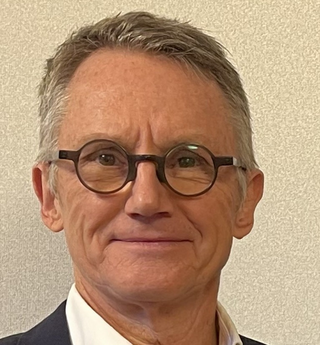
Hermann Kremers ist Ökonom mit Schwerpunkt 'Politik der Gesamtwirtschaftlichen Steuerung'. Schon seit seiner Jugend interessiert er sich für Fragen der Organisation von Zusammenarbeit innerhalb und zwischen Organisationen. In den letzten fünfzehn Jahren hat er in Asien und Afrika gelebt. Dort war er als Führungskraft bei der Gesellschaft für Internationale Zusammenarbeit (GIZ) im Auslandseinsatz. Hauptarbeitsfeld war wirtschaftliche Zusammenarbeit in den Feldern von landwirtschaftlichen Wertschöpfungsketten und Schutz von Biodiversität.
Im Rahmen des Instituts für Kulinaristik&Management berät er Unternehmen und Führungskräfte aus dem Ernährungsgewerbe. Bis 2005 war er als Projektleiter Weiterbildung am Deutschen Kompetenzzentrum für Nachhaltiges Wirtschaften (DKNW) der Universität Witten/Herdecke. Von 1996-2001 war er Koordinator der Fakultät für Wirtschaftswissenschaft der Universität Witten/Herdecke. 1995 war er Professor für Applied Micro-Economics am Kazakhstan Institute for Management, Economics and Strategic Research (KIMEP) in Almaty, Kazakhstan. Von 1993-1995 nahm er Erziehungsurlaub. Während seines Studiums war er als teilzeitbeschäftigter Mitarbeiter stellvertretender Aufsichtsratsvorsitzender der DHL Worldwide Express GmbH Deutschland und Leiter des Wirtschaftsausschusses des Gesamtbetriebsrates.
Im Rahmen seiner Dissertation zum Dr. rer. pol. beschäftigte er sich mit den Möglichkeiten der Konsumentensteuerung der Wirtschaft - ausgehend von Adam Smith Aussage: „Consumption is the sole end and purpose of all production; and the interest of the producer ought to be attended to, only so far as it may be necessary for promoting that of the consumer.“ Seine Diplomarbeit schrieb er zur Zeit der deutschen Wiedervereinigung über die Integration des DDR-Gesundheitswesens in das der BRD. Er hatte sich dazu an der Hochschule für Ökonomie in Berlin Karlshorst/DDR eingeschrieben und vor Ort die Wiedereinigung verfolgt.
Mit 15 gewann er durch einen Ferienjob bei einer Baufirma erste Einblicke in die Arbeitswelt. Dadurch wurde sein Interesse an Formen der Organisation von Zusammenarbeit geweckt. Während seiner Schul- und Studienzeit ging er diesem Interesse mit Jobs in den unterschiedlichsten Branchen weiter nach.
Hermann Kremers ist Yoga-Lehrer und Segler, er kocht, backt und isst gerne gut.
Objectives & Competences
Economics
Philosophy
Medicine
Psychology
Biology
Sociology
Participants should be able to describe which factors and interactions lead to the emergence and maintenance of health within the economic system.