
The Art of Forming Judgements
The ability to exercise judgement is of central importance in both science and life. In order to contribute to science and follow my own path, I must be able to recognise what is really happening and distinguish between information and interpretation, fact and ideology, and argument and mere assertion. The ability to exercise judgement is of central importance in both science and life. I can only contribute to science and follow my own path when I can recognise what is really happening and distinguish between information and interpretation, fact and ideology, and argument and assertion.
However, a peculiar erosion of judgement is particularly evident in current debates. For instance, the concept of 'opinion' is often confused with that of reasoned judgement. Yet an opinion is initially nothing more than a subjective stance, which can only become a judgement through precise observation and thoughtful consideration. Furthermore, the fact that a variety of conflicting opinions can broaden the scope for thought and facilitate the path to reasoned judgement is often overlooked.
Another issue that affects science itself is the illusion of unconditional objectivity. In most cases, observation and analysis take place within an interpretive framework. Researchers intervene in their subject matter, and those who make judgements always bring their own assumptions, evaluations and thought processes to the table. It is precisely the blind spots in one’s own mindset that often go unnoticed yet shape judgements the most.
This seminar will explore how judgements are formed, why they can fail and the conditions under which they are possible. Using current examples from academia, the media, and wider society, we will examine why the ability to form reasoned judgements seems to be becoming less common in an age of constant opinion-sharing. Our aim is to understand the formation of judgements not as a spontaneous reaction, but as a demanding intellectual practice — and perhaps even as an art form.
Dr. David Hornemann v. Laer
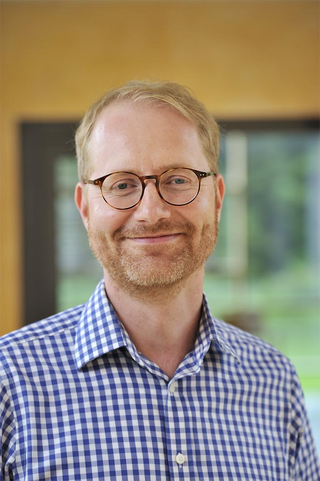
Ich habe Kunstgeschichte und Erziehungswissenschaft studiert und mich in meinem Studium vor allem mit erkenntniswissenschaftlichen Fragen auseinandergesetzt.
Mich interessiert Kunst vor allem als Schule der Wahrnehmung. Mein Forschungsinteresse gilt dem Ziel, Kunstwerke so zu betrachten, dass sie aus sich selbst heraus sprechen.
In einer Zeit, die vom Dagegen-Sein geprägt ist, brauchen wir meiner Überzeugung nach weniger Abwehr und mehr Phantasie. Nicht Protest allein verändert die Welt, sondern gute Ideen, Sensibilität und Gestaltungsmut. Kunst hilft uns, genau das einzuüben: anders zu sehen, neu zu denken und Verantwortung für das eigene Gestalten zu übernehmen – im Umgang mit Umwelt, Gesellschaft und miteinander. Kunst bedeutet für mich Freiheit: die Freiheit, wahrzunehmen, bevor man urteilt, und zu gestalten, bevor man verurteilt.
Objectives & Competences
This course focuses on how judgements are formed and what influences them. Through a variety of examples drawn from the arts, sciences, and everyday experience, we will collectively delve into the interplay between perception, thought, and interpretation. Participants are expressly encouraged to contribute examples and questions from their academic and professional fields.
The seminar aims to foster a nuanced awareness of the diverse influences on our judgement-forming processes whilst enhancing participants' ability to reflect more consciously on their perceptions, thoughts, and evaluations. The ultimate goal is to enhance participants' own capacity for judgement and develop a more sensitive approach to the conditions under which judgements are formed.