
Albert Camus, Friedrich Nietzsche Revisited: The Delusional World of (Civil) Religious Movements
Why do people seek meaning, and what happens when this quest is unsuccessful?
Many of the great questions of our time revolve around the search for meaning and community, and the loss of the self. This seminar invites participants to explore these questions from philosophical, anthropological and sociological perspectives.
Building on the work of Friedrich Nietzsche, we will discuss nihilism, and with Albert Camus, the concept of the absurd. These discussions will be complemented by anthropological reflections on the origins of meaning and perspectives from modern biology addressing the possible purposelessness of life.
There will be a particular focus on current social and political movements that offer strong narratives of meaning, for example in the form of narratives about nation, leadership, religion or collective identity.
The seminar combines key texts (including works by Albert Camus and Bruno Latour) with discussions, short presentations, and interactive activities. Participants are encouraged to share their own perspectives and give short presentations.
Prof. Dr. Werner Vogd
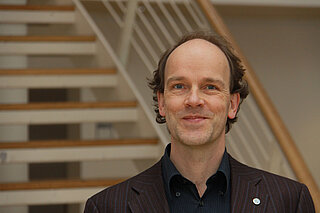
s. Homepage der UWHWerner Vogd, geb. 1963, Prof. Dr., Universität Witten/Herdecke, Lehrstuhl für Soziologie, Forschungsschwerpunkte: Systemtheorie und rekonstruktive Sozialforschung, Leiblichkeit und Polykontexturalität, Religionssoziologie, Organisationssoziologie, Medizinsoziologie. Wichtige Veröffentlichungen: Vogd, Werner / Harth, Jonathan (2015): Die Praxis der Leere. Zur Verkörperung buddhistischer Lehren in Erleben, Reflexion und Lehrer-Schüler-Beziehung. Velbrück Wissenschaft, Weilerswist. Vogd, Werner (2011): Zur Soziologie der organisierten Krankenbehandlung. Velbrück Wissenschaft, Weilerswist.Vogd, Werner (2011): Systemtheorie und rekonstruktive Sozialforschung – Versuch einer Brücke. 2. überarbeitete und erweiterte Auflage. Barbara Budrich, Leverkusen.
Objectives & Competences
Key themes of the course:
The seminar will explore why people seek meaning, and the individual and societal consequences that may arise if this search is unsuccessful. It focuses on philosophical, anthropological, and sociological perspectives on meaning, nihilism, absurdity, religion, community, and collective identity.
The following topics are covered in particular:
The human search for meaning as a fundamental philosophical, anthropological and social problem;
- Friedrich Nietzsche's diagnosis of nihilism and its significance for modern societies;
- Albert Camus' engagement with the absurd and the question of a life without ultimate meaning;
- Anthropological perspectives on the emergence and stabilisation of systems of meaning;
- Biological and evolutionary perspectives on life, purposelessness and contingency;
- Modern social and political movements that articulate strong proposals for meaning;
- Narratives of nation, leadership, religion, community and collective identity;
- The ambivalence of meaning-making: orientation, belonging and community on the one hand, and loss of self, ideologisation and exclusion on the other.
Learning outcomes at the knowledge level:
Upon completion of the seminar, students should be able to:
Explain key concepts such as meaning, nihilism, absurdity, contingency, religion, community and collective identity.
Situate the fundamental positions of Friedrich Nietzsche, Albert Camus and other selected authors within their historical and theoretical contexts.
Distinguish between different academic perspectives on the search for meaning, particularly philosophical, anthropological, religious studies, biological and social theory approaches.
Understand the significance of narratives of meaning for individual orientation, social belonging and political mobilisation.
Analyse current social and political movements with regard to their meaning-making narratives.
Recognise the ambivalence of meaning-making as both a resource for orientation and community and a potential starting point for ideologisation, dependency or exclusion.
Competencies to be acquired at the practical level:
In this seminar, students are expected to acquire or deepen the following competencies:
- to interpret, summarise and critically discuss complex theoretical texts;
- to compare different theoretical perspectives and relate them to contemporary social phenomena;
- to develop and justify their own positions on questions of meaning, nihilism and community through argumentation;
- to critically analyse current political, religious or social narratives of meaning;
- to argue nuanced arguments during discussions and engage with other perspectives;
- to prepare and present short introductory talks or contributions to discussions clearly and comprehensibly;
- to practise interdisciplinary thinking by bringing philosophical, anthropological, biological and sociological approaches into dialogue with one another;
- to reflect on their own role in proposals regarding meaning and community, and to critically assess their potential limitations.